Between wedding dress sizes: the short answer
If you are between wedding dress sizes, do not guess based on your everyday clothing label. Start with your current bust, waist, and hip measurements, compare them with the bridal size chart, and identify which area gives you the least flexibility. In most cases, the safest next step is to choose the size that accommodates the measurement that is hardest to compromise, then review style details and support options before moving forward. The goal is not to chase a flattering number. The goal is to reduce avoidable fit uncertainty before you continue to the current marketplace listing.
That is especially important when you are shopping online and trying to make a calm decision from photos, measurements, and support pages instead of an in-person fitting room.
Why being between sizes feels confusing
Wedding dress sizing often feels harder than regular apparel sizing for one simple reason: you are not comparing like with like. Bridal size charts are usually based on body measurements, while everyday shopping habits are often based on whichever size you usually pull from your closet without thinking too much about it.
That gap creates friction fast. You may measure into one size at the bust, another at the waist, and a third at the hips. You may also be looking at a specific silhouette that changes which measurement matters most. A close-fitting shape can make one area feel more critical, while an A-line skirt may reduce pressure on another.
So the right question is not “What size am I normally?” It is “Which measurement matters most for this dress, and what support information do I need before I continue?”
If you have not measured yet, start with Cupocupa’s guide on how to measure for a wedding dress at home, then come back to this page.
Step 1: Re-check your three key measurements
Before making any sizing decision, make sure your starting numbers are as accurate as possible. Focus on:
- bust
- waist
- hips
Use a soft measuring tape, keep it level, and avoid pulling it too tight. Small measurement errors can create a false “between sizes” problem, especially if you are right on a chart boundary.
Once you have those numbers, open the Size Guide and compare them against the current bridal chart. Write down where each measurement lands. Do not round all of them in the same direction. Keep the actual numbers visible so your next step stays grounded in evidence instead of guesswork.
Step 2: Identify the least flexible measurement
When you fall between sizes, the most useful question is: which area is least easy to compromise?
That answer can vary by dress shape, but the decision framework is usually more reliable than trying to force a perfect all-around match.
Bust
If your bust measurement is the one crossing into the larger size, pay close attention to neckline structure, bodice shape, and how much visual support the dress appears to provide in photos. This matters because the upper body is often one of the first places where an online dress either feels secure or does not.
Waist
If the waist is the measurement pushing you up, treat that seriously. A defined waistline usually has less room for wishful thinking than a flowing skirt does. If the featured shape has visible waist definition, prioritize clarity here.
Hips
Hip measurement becomes more or less important depending on silhouette. With a fuller skirt, the hip area may be less restrictive than it would be on a more body-following shape. That is one reason silhouette context matters before you decide how worried to be about being between sizes.
Step 3: Let the silhouette guide the decision
Not every between-size situation should be solved the same way, because not every wedding dress shape asks the same thing from the body.
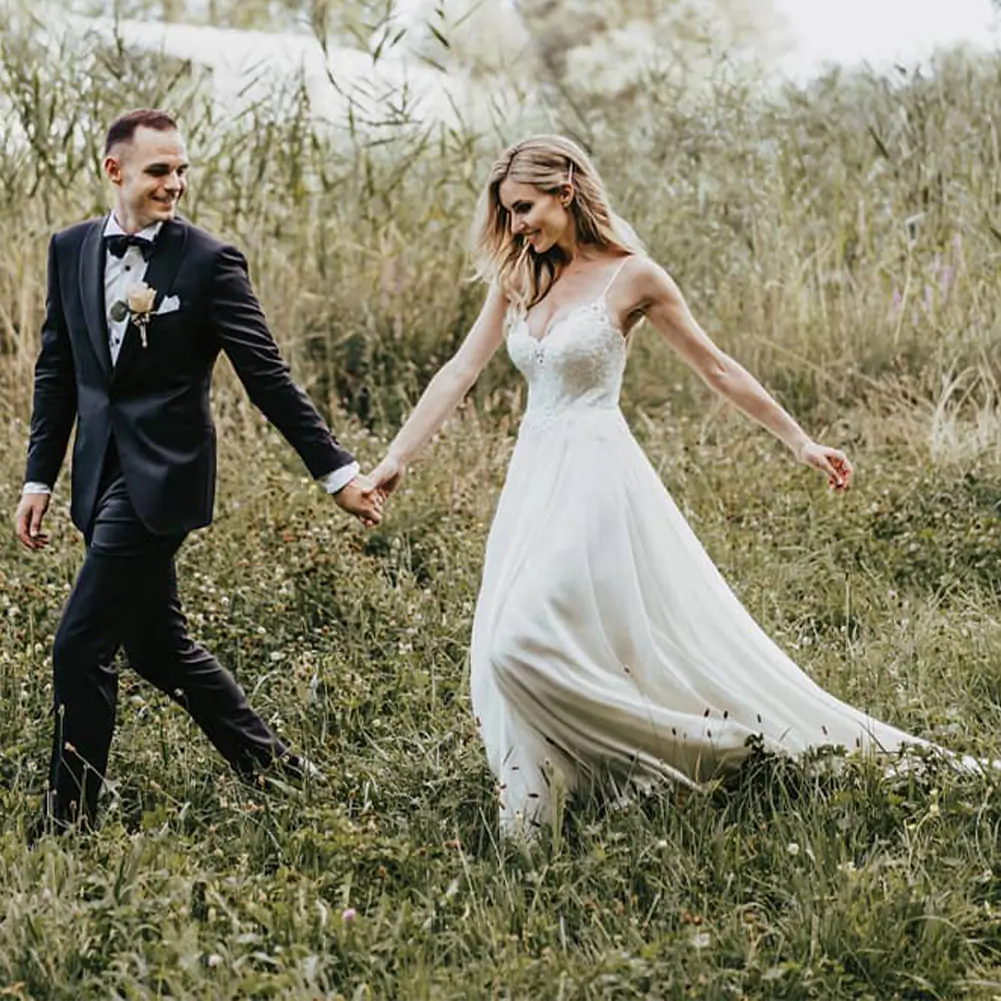
Cupocupa’s current bridal focus is the Vintage A-Line Lace Wedding Dress. That matters here because an A-line silhouette usually gives you more visual ease through the skirt than a close-fitting silhouette would. It does not remove the need for careful measuring, but it does change where tension is likely to matter most.
If you are comparing styles in the Occasionwear edit, use that context:
- If the dress shape is softer through the skirt, upper-body measurements may deserve more attention.
- If the bodice and waist are the visual anchor of the look, those areas should carry more weight in your sizing decision.
- If your uncertainty comes from shape preference as much as from measurements, pause the size decision until you are clearer on silhouette.
This is also where Cupocupa’s Bridal FAQ can help you slow the process down and check what information you still need before moving forward.
Step 4: Avoid these common mistakes
Many between-size decisions go wrong for predictable reasons. The most common ones are:
Choosing purely by your usual street size
This is the fastest way to create confusion. Bridal sizing should be anchored in measurements first, not habit.
Prioritizing the easiest measurement instead of the hardest one
If one measurement clearly pushes into the next size while the others sit lower, it is usually better to examine that tension directly than to ignore it because the lower size feels emotionally simpler.
Treating photos as proof of fit
Photos help you understand shape, neckline, back detail, and proportion. They do not replace measurement-based decision making. Use product images to understand where structure and ease may sit, not to assume identical fit outcomes.
Rushing to Amazon before your questions are specific
Cupocupa currently works as a brand showcase, support, and Amazon bridge. That means the strongest use of this site is often to reduce uncertainty before you leave it. If you already know what you need to ask, ask it before moving on.
Step 5: Know when to ask a fit question
Sometimes the right answer is not another round of self-debate. It is sending a clearer support question.
Use the Contact page if you are between sizes and need help narrowing the issue. The best questions are specific. For example:
- “My waist falls into one size and my bust into another. Which measurement should I prioritize for an A-line shape?”
- “I have already measured twice. Which part of the chart should I weight most for the featured dress?”
- “I am unsure whether my concern is sizing or silhouette. What should I compare first on the product page and size guide?”
Specific questions make the support path more useful than a general “What size am I?” message.
A practical way to think about the featured bridal path
Because the current Cupocupa bridal funnel is built around support content and a live Amazon bridge, the best sequence is usually:
- Measure accurately.
- Compare your numbers in the Size Guide.
- Review the featured dress page for silhouette and detail context.
- Check the Bridal FAQ for common pre-purchase questions.
- Use the contact form if one measurement conflict still feels unresolved.
- Continue to the marketplace listing only after the uncertainty is more specific and manageable.
That sequence will not remove every unknown, but it does create a better decision path than jumping between a chart, a product photo, and a checkout page with no structure.
What matters most before you continue
Being between wedding dress sizes does not automatically mean something is wrong. It usually means you need a more disciplined way to interpret the chart.
Focus on the measurement that is least easy to compromise, read the silhouette in context, and use the support pages that already exist on the site. If your numbers still leave you unsure, ask the question before you click away. Clarity is more valuable than speed here.
Cupocupa note
Cupocupa’s current bridal site is designed to help you compare measurements, silhouettes, and support information before you move to the current Amazon listing. The site does not replace the marketplace listing details, and it should not be used to assume shipping, alteration, or fit outcomes that have not been confirmed there.
CTA: Open the Size Guide first, then send a fit question if one measurement is still pulling you in a different direction.