Posted on Leave a comment

Can You Choose a Wedding Dress Size From Measurements Alone?

You can choose a wedding dress starting size from your measurements, but measurements alone are usually not the whole decision. They tell you where to begin, especially for bust, waist, and hip comparison, but they do not fully explain how a specific silhouette, neckline, back detail, and fabric structure may feel once the dress is on. If you are ordering online, the safest approach is to use measurements as your base, then confirm the shape, photo details, and support information before you move forward.

That matters even more when you are comparing bridal styles without trying them on first. On the current Cupocupa bridal path, the decision is not only about a number on a chart. It is also about how the dress is cut, how much structure you can see in the bodice, how the skirt falls, and whether the back detail changes how supported you want to feel. If you need the measurement baseline first, start with the Size Guide, then use the rest of this checklist to decide whether your first size choice is actually the right one.

What measurements can do well

Measurements are still the most useful first filter when you shop for a wedding dress online. They help you move from guesswork to a clearer starting point, and they make style browsing more practical.

They are especially helpful for three things:

1. They give you a consistent starting size

If you know your current bust, waist, and hip numbers, you can compare yourself against the bridal chart instead of relying on your usual ready-to-wear size. That is important because bridal sizing often does not line up neatly with what you wear in everyday clothing. The point of the chart is not to predict perfection. It is to keep your first choice anchored in something measurable.

2. They show where the main fit pressure will be

Your measurements can reveal which area is most likely to drive the decision. For some brides, the waist is the deciding point. For others, the bust or hip matters more. This is one reason “measurements only” is not always enough: the chart might point you to one size, but the silhouette may place more visual or structural emphasis on one part of the dress than another.

3. They help you ask better questions before ordering

Once you know your numbers, you can use them to ask more precise pre-purchase questions. That usually leads to a better decision than asking whether a dress “runs big” or “runs small.” If you want help framing those questions, Cupocupa already has a related guide on how to ask better fit questions before ordering a wedding dress online.

Where measurements stop being enough

The weakness of measurements is simple: they tell you size, but not the full wearing experience. Two dresses can suit the same chart entry and still feel very different once you consider support, movement, and shape.

Bodice structure changes the decision

A dress with visible structure through the bodice may feel firmer and more guided through the upper body. A softer dress may move more easily but feel less anchored, especially if you are sensitive to support at the bust or waist. That is why a size choice should not be separated from what you see in product photos. The Cupocupa article on whether a wedding dress will feel too structured or too soft is useful here because structure affects how confident a size choice feels.

Back detail changes support expectations

If a dress has a lower or more open back, some shoppers care less about the number on the chart and more about whether the shape will still feel secure enough for the setting. Measurements help, but they do not replace a visual check of the back line, the bodice shape, and the way the dress is meant to sit through the torso.

Silhouette changes where fit matters most

An A-line shape often gives you more flexibility through the lower half than a closer-fitting silhouette would. That does not mean you can ignore hip measurements. It means the same chart number may feel more forgiving in one silhouette than another. If you are browsing different shapes, the Occasionwear Bridal Edit and the Wedding Dresses category are better places to compare the visual cut before you rely on the chart alone.

How to use measurements the right way before ordering online

If you want a practical answer, use this sequence instead of asking whether measurements alone are enough.

Step 1: Start with your current numbers, not memory

Use fresh bust, waist, and hip measurements. Even small differences can matter when you are using a bridal chart as your baseline. If you have not measured yet, go to the Size Guide first.

Step 2: Match those numbers to the chart

Find the nearest starting size from the chart rather than the size you hope to be. This is the part measurements do best: they remove emotion from the first pass and give you a real point of comparison.

Step 3: Look at the photos for structure, neckline, and back detail

After you have a starting size, use the product photos to judge how the dress is built. Look for where the bodice appears shaped, where the skirt begins to open, and whether the neckline or back detail suggests you may want more support confidence before ordering. Measurements alone cannot answer that.

Step 4: Read the support pages before you continue

Before moving ahead, review the current Bridal FAQ and Shipping & Return Guidance. This keeps your size decision connected to the real support path on the site instead of turning it into an isolated guess.

Step 5: Ask one focused question if something still feels unclear

If your measurements put you in between chart points, or the photos make you unsure about support or shape, send one focused note through Contact. A concise question based on your measurements and the specific dress detail is more useful than asking for a general opinion.

How this applies to Cupocupa’s current bridal focus

Cupocupa’s current live bridal path centers on a vintage A-line lace wedding dress and a support-first bridge flow. That means the most useful way to shop the site is not to treat the size chart as a final answer by itself. Instead, use the chart to narrow your starting point, then compare the photos and support pages before you continue to the current listing.

For an A-line dress in particular, measurements are strong enough to get you close, but they still need context. The shape may offer more ease through the skirt than a more body-following silhouette, while lace placement, neckline shape, and back openness can still affect how confident you feel about the choice. This is why Cupocupa’s bridal funnel includes the Size Guide, Bridal FAQ, Contact, and the featured dress path instead of asking you to make the decision from one chart screenshot alone.

A simple rule to remember

If your measurements line up cleanly with the chart and the dress photos do not raise any support or silhouette concerns, measurements may be enough to choose a starting size with reasonable confidence. If your measurements fall between sizes, or the style details make you pause, measurements are only the first step, not the final answer.

That is the better mindset for online bridal shopping: use measurements to choose where to begin, then use shape, photos, and support content to decide whether that size choice actually makes sense for the dress you are considering.

What to check next

If you are narrowing down your next step on Cupocupa, this order works well:

That sequence keeps the decision inside the current Cupocupa bridal funnel: measurements first, context second, then a clearer move toward the current listing.
Posted on Leave a comment

How to Tell If a Wedding Dress Will Feel Too Structured or Too Soft Before You Order

How to Tell If a Wedding Dress Will Feel Too Structured or Too Soft Before You Order

If you are deciding between a wedding dress that feels more structured and one that feels softer, start by looking at three things first: how the skirt falls, how defined the bodice looks, and how much precision the fit seems to require. A softer bridal direction usually moves more easily, feels less body-close through the lower half, and gives you a gentler visual line in photos. A more structured direction usually looks cleaner, sharper, and more shaped, but it often asks for more fit accuracy. When you are shopping online, that difference matters because it changes how confidently you can move from product photos to a real purchase decision.

At Cupocupa, the current bridal path is intentionally centered on a softer A-line direction rather than a tightly sculpted silhouette. That makes this question especially useful if you are comparing the live featured dress with the more defined shapes you may also have in mind.

Why this decision matters earlier than most brides expect

Many online bridal shoppers think they are choosing a dress based mostly on neckline, lace, sleeves, or back detail. Those details matter, but the first big filter is often structure. If you skip that step, you can end up comparing dresses that are beautiful in photos but wrong for the way you actually want to feel during the ceremony.

A dress that feels too structured for you can create second-guessing around movement, comfort, and measurement pressure. A dress that feels too soft for you can leave you wishing for a more defined line, especially if you imagined a stronger contour in your photos.

That is why the better question is not only, “Do I like this dress?” It is, “Do I want a dress that holds its line firmly, or one that gives me more movement and ease?”

Start with skirt behavior, not just the front photo

The fastest way to judge structure online is to study what the skirt seems to do.

Signs a dress may feel softer

A softer wedding dress usually:

  • falls away from the body instead of tracing it closely
  • creates movement when walking
  • looks easier through the hips and lower half
  • feels visually lighter in side and angled views

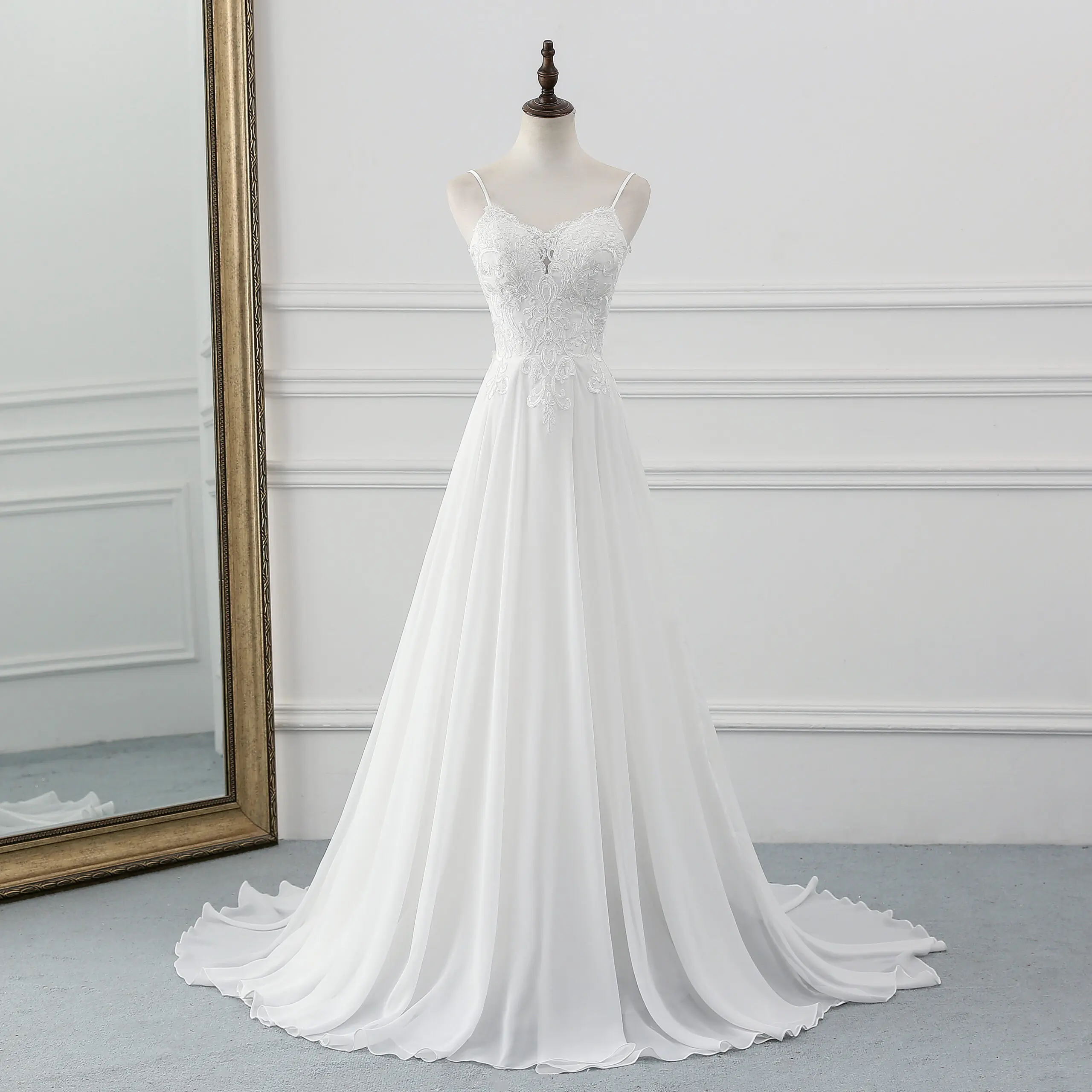
This is why a softer A-line shape often feels approachable for a first bridal decision. On Cupocupa’s current featured wedding dress, the skirt direction is meant to read more romantic and fluid than sharply sculpted.

Signs a dress may feel more structured

A more structured wedding dress usually:

  • keeps a clearer outline even when the model is standing still
  • looks more controlled through the waist and hips
  • creates a stronger body-defined impression
  • depends more on precise fit through key measurement points

This does not make it better or worse. It simply means the dress may ask more from the sizing decision, and it may feel less forgiving if you are still uncertain about your exact starting size.

Look at the bodice for visual firmness

The bodice often tells you more than the skirt about how “held” the dress might feel.

If the upper part of the dress looks highly shaped, close through the torso, or visually firm around the bust and waist, that usually signals a more structured experience. If the bodice looks supportive but not severe, and the overall line relaxes into the skirt, you are usually looking at a softer bridal direction.

This is where close-up product imagery becomes useful. On the Cupocupa site, the current bridal product gallery gives you more than one angle for the lace bodice and overall dress line. When you review those photos, do not ask only whether the bodice is pretty. Ask whether it looks like it wants exact control, or whether it works with a little more softness through the full silhouette.

Use your own measurement confidence as a clue

One of the most practical ways to choose between structured and soft silhouettes is to be honest about how certain you feel about your measurements.

If you already have fresh bust and waist numbers and you usually feel comfortable ordering fitted formalwear online, you may be more open to a dress with a cleaner, more body-defined line.

If you are still narrowing your starting size, a softer silhouette often gives you a calmer entry point. That does not remove the need to measure. It simply means the overall shape may feel less dependent on a sharply exact visual contour through every area.

Before moving forward, compare your numbers with the current Cupocupa size guide. The live bridal support path is built to help you review size before you rely too heavily on a dress photo alone.

Read the back detail as part of structure, not just style

Brides often treat open-back design as a style-only feature, but it also affects how a dress feels.

For example, an open criss-cross back can make a dress feel more visually light and more romantic, even when the bodice itself still gives shape. That is part of why the current Cupocupa featured dress reads softer overall: the combination of A-line movement, lace bodice, and open back creates a less rigid impression than a more closed, sculpted silhouette would.

When you review back photos, ask:

  • does the back detail make the dress feel airy or controlled?
  • does the dress still look easy to move in from the side and back views?
  • does the upper body look firm in a way that feels reassuring or restrictive to you?

Those questions help you move beyond “I like this back design” into “I understand how this design changes the total feel of the dress.”

Compare the emotional effect you want in photos

Structured versus soft is not only a fit issue. It is also a photo issue.

A softer dress direction often reads as:

  • romantic
  • lighter
  • easier in motion
  • gentler around outdoor or beach settings

A more structured direction often reads as:

  • sharper
  • more sculpted
  • more formal
  • more controlled in still poses

If your ceremony vision leans toward movement, softness, and a less severe line, a softer silhouette may support that better. If you want a stronger contour and a more defined body line, structure may matter more to you than softness.

Cupocupa’s current Occasionwear Bridal Edit explicitly frames this comparison as “softer movement” versus “a more sculpted line.” That is a useful way to sort your preferences before you over-focus on decorative details.

What to check before you continue to Amazon

Before leaving the site for the live marketplace listing, it helps to keep the decision process simple.

Check these in order

  1. Decide whether you want softer movement or a more sculpted line.
  2. Review the featured dress from front, angle, and back views.
  3. Confirm your starting size in the Size Guide.
  4. Read the Bridal FAQ if you are still comparing silhouettes or wondering how to think about between-size decisions.
  5. Use Contact Bridal Support if your hesitation is still tied to fit direction, timing, or how the silhouette may feel on your frame.

If timing is part of the pressure, keep the Shipping & Returns guidance in the same review flow. The site is careful not to overpromise on ceremony-sensitive timing, so that page works best as a checkpoint before you commit.

A simple rule if you still feel undecided

If you keep returning to the question and still cannot tell which direction feels right, use this shortcut:

  • choose softer if movement, ease, and a less body-close finish matter most
  • choose more structured if contour, control, and a sharper line matter most

That answer will usually narrow your next step faster than comparing ten small design details at once.

And if you want more bridal guidance before you move on, the Bridal Journal already covers related questions around measurements, size reading, and fit questions you can ask before ordering online.

Next step

Compare the featured A-line dress first, then open the Size Guide and send a bridal support question if you still feel split between a softer and more structured silhouette.

Posted on Leave a comment

How to Ask Better Fit Questions Before Ordering a Wedding Dress Online

The short answer

Before ordering a wedding dress online, ask fit questions that are specific enough to change your next step. Instead of asking whether the dress will “fit,” ask which measurement matters most, where the silhouette is least forgiving, which photos answer your concern, and whether your uncertainty is really about size, shape, or timing. Better questions do not guarantee a perfect outcome, but they do help you use the current Cupocupa support path more effectively before you continue to the live Amazon listing.

Why broad fit questions usually create more confusion

Many online bridal shoppers know they have a concern, but the question stays too vague to be useful. “Will this fit me?” sounds reasonable, yet it combines several different issues at once:

  • body measurements
  • silhouette preference
  • comfort expectations
  • photo interpretation
  • purchase timing

When those issues stay bundled together, every support page feels only partly helpful. Better fit questions turn uncertainty into a sequence. On Cupocupa, that sequence usually starts with the Size Guide, moves through the featured dress and bridal support pages, and only then points you toward the current Amazon listing with a clearer decision.

Start by naming the kind of fit question you actually have

Before you ask anything else, sort your concern into one of three buckets:

Measurement question

You are unsure how to use bust, waist, and hip numbers or how to choose a starting size when they do not all map to the same row.

Silhouette question

You are not sure whether the dress shape itself matches what you want, even if the photos initially appeal to you.

Timing question

You may think the issue is fit, but the real concern is whether you have enough time to compare, clarify, and place an order with confidence.

Each type of question has a different next step. Measurement questions belong with the Size Guide, How to Measure for a Wedding Dress at Home, and Wedding Dress Size Chart Explained. Silhouette questions belong with the Occasionwear edit, the live Wedding Dresses, and the current featured A-line dress. Timing questions usually need Shipping & Returns plus a more deliberate pause before checkout.

Fit question 1: Which measurement should I prioritize if my numbers split across sizes?

This is one of the best bridal questions because it is concrete. If your bust, waist, and hips point to different sizes, your task is to identify which area leaves the least room for compromise in the silhouette you are considering.

That is why Cupocupa’s sizing path works best in order:

  1. measure carefully
  2. compare all three numbers
  3. identify the most limiting measurement
  4. then evaluate the silhouette

If you are already in this situation, read What to Do If You Are Between Wedding Dress Sizes before you keep browsing. That article helps turn a split-size result into a usable next step instead of a stalled decision.

Fit question 2: Is my concern really about the size, or is it about the silhouette?

This question prevents a common mistake: trying to solve a shape problem with a size answer.

Sometimes a shopper says, “I am not sure this will fit,” when the deeper issue is that the silhouette may feel too structured, too revealing, or simply unlike the mental picture they had in mind.

Cupocupa’s current bridal focus is a softer A-line direction. That matters because an A-line silhouette often feels different from a more body-conscious shape even before you get to the exact size discussion. If you are evaluating the live featured dress, a better question is:

“Am I unsure about the measurement row, or am I unsure that this overall shape is the one I want?”

That question tells you whether to go back to the size chart or compare silhouettes more honestly.

Fit question 3: Which photos actually answer my fit concern?

Not every photo helps with every question. A front-facing image may help with neckline and first impression, but it does not answer the same things as a back view, an angle view, or a close detail image.

Before ordering online, ask:

  • Do I need to understand the bodice shape better?
  • Do I need a clearer sense of how the waist is placed?
  • Am I worried about the back detail more than the front?
  • Do I still need a better sense of movement and overall balance?

Cupocupa’s current dress page is a useful reference point because the featured product includes front, angle, back, and detail-led imagery, so you can compare the concern you have with the image type most likely to answer it.

Fit question 4: Where do I expect the dress to feel least forgiving?

Ask yourself whether your concern is mainly about:

  • bust structure
  • waist definition
  • hips and movement
  • back detail

When you identify the area, the rest of the support path becomes easier to use. A waist concern sends you back to the chart. A back-detail concern sends you back to the product photos. A movement concern may send you back to the silhouette comparison. A broad “comfort” concern by itself rarely tells you what to do next.

This is where the Bridal FAQ becomes more useful. It works best when you already know the part of the decision that needs clarification.

Fit question 5: What would make me feel ready to continue to Amazon today?

This question matters because Cupocupa currently works as a support and Amazon bridge path, not as a place to replace the final marketplace decision. The goal is not endless research. The goal is to move forward with the right level of clarity.

Ask yourself what the missing piece actually is:

  • one measurement check
  • one silhouette comparison
  • one support answer
  • one timing clarification

If the missing piece is small and specific, use the support page that matches it. If the missing piece is still broad, you probably need to slow down before you treat Amazon checkout as the place where all uncertainty gets resolved.

Fit question 6: Is this a support question, or is it a timing question in disguise?

Brides often feel pressure to keep momentum, which can make every hesitation sound like a fit issue. Sometimes the real problem is that the timeline feels tight, and that pressure makes every photo and size choice feel less stable.

If that sounds familiar, ask:

“Do I need more fit clarity, or do I need to understand whether I should be ordering yet?”

A fit question can often be improved by better measurements and better comparison. A timing question usually needs the support boundary to be clear first. On Cupocupa, Shipping & Returns exists to help frame that boundary without inventing guarantees the site cannot confirm independently of the live listing.

Fit question 7: What is the most useful question I could send through Contact?

By the time you reach Contact, the strongest message is usually short and specific. Instead of asking:

“Will this dress fit me?”

ask something closer to:

“My bust and hips point to one row, but my waist points to another. For a softer A-line direction, which measurement should I treat as the stricter checkpoint before I continue?”

Or:

“I like the featured backless A-line dress, but I am still unsure whether my concern is the open-back detail or the overall silhouette. Which current Cupocupa page should I compare first before moving on?”

Those questions show that you already used the available support material. They are easier to answer and more likely to help you make a real decision.

A simple support path for asking better fit questions

If you want one practical process, use this order:

  1. measure with the how-to-measure guide
  2. compare the numbers in the Size Guide
  3. read the size chart explainer if the chart still feels abstract
  4. use between sizes if your numbers split
  5. compare the Occasionwear edit and Wedding Dresses path
  6. review the featured A-line dress
  7. use Contact only after your question becomes specific

This sequence works because it keeps the question grounded in the current Cupocupa bridal funnel rather than drifting into generic wedding content.

When your best next step is not another question

There are also moments when the right move is to stop asking and act on the answer you already have. That is usually true when:

  • your measurements are now clear
  • the silhouette direction feels right
  • the photos answer the concern you had
  • your remaining question is actually final marketplace detail, not bridal fit support

At that point, the goal is not to keep generating uncertainty. It is to continue with more confidence than when you started.

Clear next step

Start with the Size Guide and featured A-line dress, then use Contact only after you can name the exact fit question that is still blocking your decision.

Cupocupa note: Cupocupa’s current bridal site is designed to help you compare, measure, and ask sharper pre-purchase questions before you move to the live Amazon listing. It should improve the quality of your decision, but it should not be treated as a substitute for the final listing terms, availability, or support details that need confirmation at purchase time.

Posted on Leave a comment

Wedding Dress Size Chart Explained: How to Read Bust, Waist, and Hip Measurements

To read a wedding dress size chart, do not start with the size number itself. Start with your current bust, waist, and hip measurements, compare each number against the chart, and identify which area creates the least room for compromise. The point of the chart is not to tell you what size you usually are. The point is to help you choose the clearest starting size for a specific bridal silhouette before you continue to the current Amazon listing.

For Cupocupa visitors, this matters because the bridal path is built around support-first decisions. The best next step is usually to compare your numbers with the current Size Guide, review the featured dress direction, and ask a focused question through Contact if one measurement still leaves you uncertain.

Why wedding dress size charts feel harder than regular size charts

Wedding dress size charts create confusion because most shoppers bring everyday clothing habits into a bridal decision. In regular apparel, many people already know the size label they tend to buy. In bridal shopping, that shortcut is much less reliable. The chart is built around body measurements, not around the label you prefer to see on a hanger.

That is why a bridal chart can feel stricter at first. It asks you to work from real numbers:

  • bust
  • waist
  • hips

Those numbers are more useful than guesswork, but only if you read them in the right order. If you jump straight to the size label without understanding which measurement matters most, the chart becomes frustrating instead of helpful.

If you have not measured carefully yet, start with How to Measure for a Wedding Dress at Home. The chart only works when the starting numbers are trustworthy.

Step 1: Read the chart as three separate checkpoints

The easiest mistake is to treat the chart like one big average. Instead, read it as three checkpoints that work together:

Bust

Your bust measurement helps you judge how the upper body is likely to start fitting. It matters because the bodice often sets the tone for comfort, structure, and confidence.

Waist

Your waist measurement is usually the most important decision number on a bridal chart because it often shapes how the dress sits through the center of the body. Even when a silhouette softens below the waist, the waist itself still affects the overall feel of the dress.

Hips

Your hip measurement matters differently depending on silhouette. A closer-fitting shape makes hip measurements feel more critical. A softer A-line direction may create a little less pressure there, but that does not make hip measurements irrelevant.

This is why you should not ask, Which line matches me perfectly? The better question is, Which measurement is most likely to create fit friction if I ignore it?

Step 2: Do not panic if the three numbers point to different sizes

Many brides do not land neatly in one row. That is normal. A wedding dress size chart is a tool for decision quality, not proof that your body is difficult.

If your bust, waist, and hips do not all match the same size:

  1. Write down which size each measurement points to.
  2. Notice which measurement falls farthest from the others.
  3. Consider how the silhouette changes what matters most.
  4. Use the chart to narrow the decision, not to force a false precision.

If that situation sounds familiar, Cupocupa’s guide on What to Do If You Are Between Wedding Dress Sizes is the most useful next read. It explains how to keep moving when the chart gives you more than one possible answer.

Step 3: Let the silhouette change how you interpret the chart

A size chart is not separate from the dress shape. The same body measurements can feel different depending on how fitted or relaxed the overall silhouette is.

For example, the current Cupocupa bridal focus centers on a softer featured A-line dress. That matters because an A-line silhouette usually puts less visual and physical pressure on the hips than a more sculpted shape would. When you read the chart for a softer silhouette, you are still taking hip measurements seriously, but you are also paying close attention to how the bodice and waist set the fit direction.

If you want broader context before comparing the featured product, the Occasionwear bridal edit and the current Wedding Dresses page help keep the silhouette conversation grounded in the live Cupocupa path.

Step 4: Treat the waist as the place where uncertainty often becomes real

Shoppers often focus on bust first because it feels intuitive, or on hips because they worry about movement. In practice, the waist is often the measurement that turns a maybe into a clear decision point.

Why? Because the waist tends to influence:

  • how stable the bodice feels
  • whether the dress sits where it should
  • whether the silhouette looks balanced from top to skirt

This does not mean every bride should ignore bust or hips. It means the waist is usually worth slowing down for. If one number deserves a second check before you keep going, it is often that one.

That is also why the Size Guide should not be treated as a quick skim. Read it carefully, compare all three numbers, and make sure the middle of the body is not the place you are quietly overlooking.

Step 5: Know what a size chart can and cannot tell you

A wedding dress size chart is valuable, but it is not magic. It can help you make a stronger starting choice. It cannot guarantee how the dress will feel in motion, how you will react to the neckline, or whether the timing of your purchase fits your wider planning window.

Use the chart for what it does well:

  • narrowing your likely starting size
  • highlighting where your uncertainty really is
  • helping you ask smarter questions before ordering

Do not use it for what it cannot do:

  • predicting exact comfort from one number alone
  • replacing visual comparison of silhouette and detail
  • promising that every body area will feel identical in every style

That is why Cupocupa’s bridal path does not stop at sizing. It connects the chart with the Bridal FAQ, Shipping & Returns, the featured product page, and direct support through Contact.

A simple way to read the chart without overthinking it

If you want a practical method, use this order:

  1. Measure carefully.
  2. Compare bust, waist, and hips separately.
  3. Mark the measurement that leaves the least room for compromise.
  4. Re-check the silhouette you are considering.
  5. Use support pages before you treat the chart as final.

This works well because it keeps the process answer-first. You are not chasing a perfect label. You are reducing the biggest source of preventable uncertainty.

For many shoppers, that one shift changes the entire experience. The chart stops feeling like a judgment and starts acting like a planning tool.

When to pause and ask a question instead of guessing

You do not need to stop at the first uncertainty, but you should pause when the chart still leaves one meaningful question unresolved. Good reasons to ask for support include:

  • your measurements split across multiple sizes and you are not sure which matters most
  • you understand the chart, but not how it relates to the featured silhouette
  • you are deciding between moving ahead and waiting for more clarity

If that is where you are, the best next step is not random reassurance. It is a focused question. The Contact page is most useful when you can say exactly what you need help with, such as whether your uncertainty is mainly about bust, waist, hips, or timing.

What to review next on Cupocupa

Before you continue to the current Amazon listing, keep the support path simple:

  1. Re-check your measurements with the Size Guide.
  2. Read How to Measure for a Wedding Dress at Home if your starting numbers still feel shaky.
  3. Use What to Do If You Are Between Wedding Dress Sizes if your measurements do not map neatly to one row.
  4. Compare the live bridal direction in the Occasionwear edit or the current Wedding Dresses page.
  5. Review the featured A-line dress if that silhouette is the one you are considering.
  6. Use the Bridal FAQ, Shipping & Returns, and Journal if you need broader support before moving forward.

Clear next step

Open the Size Guide first, then use Contact if one measurement still feels unclear before you continue to the current Amazon listing.

Cupocupa note: Cupocupa’s current bridal site works as a support and Amazon bridge experience, not as a place to make fit promises beyond what the live listing and support pages can confirm. The goal of the size chart is to help you make a better-prepared decision, then continue with more clarity rather than more pressure.

Posted on Leave a comment

Beach Wedding Dresses: What to Look for Before You Order

If you are shopping for beach wedding dresses, start by looking for movement, comfort, and visual lightness before anything else. A beach ceremony usually changes what matters first: the dress has to feel easier to walk in, easier to wear for longer stretches, and easier to picture in natural light, open air, and uneven ground. That often means softer silhouettes, lighter visual structure, and details that still feel bridal without becoming heavy or difficult to manage.

For Cupocupa visitors, that usually points toward a softer A-line direction rather than a highly sculpted silhouette. The current live bridal focus already follows that logic, which makes beach wedding dress shopping a natural fit for the site's existing support path: compare the silhouette, check your measurements, review key support pages, and then continue to the current Amazon listing with more clarity.

The short answer

The best beach wedding dresses usually balance three things: easy movement, a lighter visual feel, and enough structure to still look bridal in photos. If a dress feels too stiff, too heavy, or too restrictive through the lower body, it can become harder to wear confidently in a beach setting. If it feels too loose or too casual, it may lose the shape and presence you want for the ceremony.

That is why many brides start with silhouettes that feel softer and more fluid rather than highly fitted from top to bottom.

Why beach wedding dresses need a different lens

A beach ceremony changes the context around the dress. Even if the wedding is still formal, the environment itself adds variables that matter more than they might in an indoor venue:

  • walking across sand or uneven outdoor ground
  • moving in wind and humidity
  • standing in bright daylight rather than controlled indoor lighting
  • wanting a bridal look that feels relaxed instead of overworked

These factors do not automatically rule out dramatic dresses. They just change which details deserve the most attention first. Instead of starting with trend language alone, it helps to ask whether the silhouette will still feel good once you move through the whole day.

Start with silhouette, not decoration

Many brides begin by looking at lace, sleeves, sparkle, or neckline. Those details matter, but silhouette usually has the biggest effect on whether a beach wedding dress feels right in motion.

A-line is often the easiest starting point

A softer A-line silhouette is usually one of the most practical beach-friendly directions because it creates shape without holding tightly through the hips and thighs. It can still feel romantic and clearly bridal while giving you a bit more freedom when you walk, turn, sit, or move through a breezier setting.

That is one reason the current featured Cupocupa dress works well as a starting reference. Its A-line shape, lighter skirt movement, sweetheart neckline, and open back detail all fit the kind of visual direction many brides search for when they type beach wedding dresses.

Highly fitted silhouettes need more confidence

A more sculpted silhouette can look beautiful in editorial photos, but it often asks for more from the fit. If the lower body fit is already a concern, or if you know you want easier movement, a tightly fitted silhouette may create more stress than clarity.

That does not mean fitted dresses are wrong for the beach. It means you should be more careful about how the dress behaves, not just how it looks in one still image.

What usually matters most in a beach wedding dress

If you want a practical checklist, these are the areas to review first.

1. Movement through the skirt

For a beach setting, the skirt should feel like it can move with you rather than fight you. A dress that opens more naturally from the waist down often feels more balanced outdoors.

This matters for more than comfort. It also affects how the dress photographs while walking and how relaxed you feel during the ceremony. A lighter-feeling skirt line often makes the whole dress feel more natural in a beach environment.

2. The visual weight of the bodice

Beach wedding dresses do not have to be minimal, but the top half of the dress usually works best when it gives definition without looking too dense or overbuilt. Sweetheart necklines, lace bodices, and open details can still feel bridal while keeping the overall impression softer.

The current live Cupocupa bridal product uses this kind of balance: a defined bodice with a lighter overall presence. If that is the direction you already like, it is worth reviewing the wedding dresses category and Occasionwear edit through that lens rather than searching only by generic inspiration photos.

3. Back detail and ceremony feel

Beach ceremonies often pair well with back details that feel open, airy, or romantic. A backless or open criss-cross back design can give the dress more personality without making the whole silhouette feel heavier.

But this only works if it still matches your comfort level. If you like the look of an open back but are unsure how it will feel in motion, that is exactly the kind of question worth checking before you order.

4. Fit confidence

Fit matters for every wedding dress, but online beach wedding dress shopping can make uncertainty feel bigger because so much of the look depends on how the silhouette moves on your body. Before ordering, use real measurements rather than your usual ready-to-wear size.

Cupocupa's Size Guide and How to Measure for a Wedding Dress at Home article are the best next step if you are narrowing down silhouettes but are not yet confident in size direction.

How to tell if a dress feels too heavy for the beach

You do not need technical fabric expertise to make a better decision. A few simple questions will usually tell you a lot:

  1. Does the dress look like it wants soft movement, or does it rely on stiffness?
  2. Does the lower half feel easy to picture while walking outdoors?
  3. Does the neckline and bodice create romance without making the top half feel visually overloaded?
  4. Would you rather feel light and fluid, or highly sculpted and formal?

If your answer keeps coming back to ease, softness, and movement, you are likely in the right search territory for beach wedding dresses.

What to check if you are ordering a beach wedding dress online

Online shopping adds another layer of decision-making, so it helps to slow down and check the basics in the right order.

Review the shape before the styling language

Words like boho, romantic, vintage, and lace can all be useful, but silhouette is still the more reliable starting point. A dress can sound perfect in a title and still not behave the way you want it to.

Measure before choosing a size

If the shape is right but the fit direction is wrong, the dress can stop feeling beach-friendly very quickly. Take bust, waist, and hip measurements, compare them carefully, and do not rely only on your usual size label.

If you are close between sizes, read What to Do If You Are Between Wedding Dress Sizes before you move forward.

Confirm support boundaries clearly

Cupocupa's current site model is built as a brand and support bridge, not as a promise that all checkout details are finalized on-site. The Shipping & Returns page explains that price, timing, and returns should be confirmed on the live Amazon listing before purchase.

That boundary is useful, not limiting. It helps you use the site for what it does best: clarifying shape, fit questions, and pre-purchase confidence.

A Cupocupa note on beach wedding dresses

Right now, the Cupocupa bridal path is strongest when you are comparing a softer, romantic wedding dress direction and want clearer support before ordering online. The current live product focus is especially relevant if your beach wedding dress search includes terms like:

  • A-line
  • sweetheart neckline
  • backless wedding dress
  • lighter bridal silhouette
  • beach ceremony wedding dress

If that sounds like your direction, the featured dress page is the best product anchor to review next.

If you are still uncertain, the smartest move is not more scrolling. It is checking your measurements, comparing support pages, and asking the most important fit questions before you order.

What to do next

If you are looking for beach wedding dresses and want a softer bridal look, move through these steps in order:

  1. Review the featured A-line dress for silhouette and back detail.
  2. Open the Size Guide and compare your measurements.
  3. Read the Bridal FAQ for pre-purchase questions.
  4. Use the contact page if you want a second opinion before ordering.

That path will usually give you a better answer than trying to judge a beach wedding dress from a single image or a generic style roundup.

CTA: Start with the featured A-line beach-friendly bridal dress, then open the Size Guide before you continue to Amazon.

Posted on Leave a comment

What to Do If You Are Between Wedding Dress Sizes

Between wedding dress sizes: the short answer

If you are between wedding dress sizes, do not guess based on your everyday clothing label. Start with your current bust, waist, and hip measurements, compare them with the bridal size chart, and identify which area gives you the least flexibility. In most cases, the safest next step is to choose the size that accommodates the measurement that is hardest to compromise, then review style details and support options before moving forward. The goal is not to chase a flattering number. The goal is to reduce avoidable fit uncertainty before you continue to the current marketplace listing.

That is especially important when you are shopping online and trying to make a calm decision from photos, measurements, and support pages instead of an in-person fitting room.

Why being between sizes feels confusing

Wedding dress sizing often feels harder than regular apparel sizing for one simple reason: you are not comparing like with like. Bridal size charts are usually based on body measurements, while everyday shopping habits are often based on whichever size you usually pull from your closet without thinking too much about it.

That gap creates friction fast. You may measure into one size at the bust, another at the waist, and a third at the hips. You may also be looking at a specific silhouette that changes which measurement matters most. A close-fitting shape can make one area feel more critical, while an A-line skirt may reduce pressure on another.

So the right question is not “What size am I normally?” It is “Which measurement matters most for this dress, and what support information do I need before I continue?”

If you have not measured yet, start with Cupocupa’s guide on how to measure for a wedding dress at home, then come back to this page.

Step 1: Re-check your three key measurements

Before making any sizing decision, make sure your starting numbers are as accurate as possible. Focus on:

  • bust
  • waist
  • hips

Use a soft measuring tape, keep it level, and avoid pulling it too tight. Small measurement errors can create a false “between sizes” problem, especially if you are right on a chart boundary.

Once you have those numbers, open the Size Guide and compare them against the current bridal chart. Write down where each measurement lands. Do not round all of them in the same direction. Keep the actual numbers visible so your next step stays grounded in evidence instead of guesswork.

Step 2: Identify the least flexible measurement

When you fall between sizes, the most useful question is: which area is least easy to compromise?

That answer can vary by dress shape, but the decision framework is usually more reliable than trying to force a perfect all-around match.

Bust

If your bust measurement is the one crossing into the larger size, pay close attention to neckline structure, bodice shape, and how much visual support the dress appears to provide in photos. This matters because the upper body is often one of the first places where an online dress either feels secure or does not.

Waist

If the waist is the measurement pushing you up, treat that seriously. A defined waistline usually has less room for wishful thinking than a flowing skirt does. If the featured shape has visible waist definition, prioritize clarity here.

Hips

Hip measurement becomes more or less important depending on silhouette. With a fuller skirt, the hip area may be less restrictive than it would be on a more body-following shape. That is one reason silhouette context matters before you decide how worried to be about being between sizes.

Step 3: Let the silhouette guide the decision

Not every between-size situation should be solved the same way, because not every wedding dress shape asks the same thing from the body.

Cupocupa’s current bridal focus is the Vintage A-Line Lace Wedding Dress. That matters here because an A-line silhouette usually gives you more visual ease through the skirt than a close-fitting silhouette would. It does not remove the need for careful measuring, but it does change where tension is likely to matter most.

If you are comparing styles in the Occasionwear edit, use that context:

  • If the dress shape is softer through the skirt, upper-body measurements may deserve more attention.
  • If the bodice and waist are the visual anchor of the look, those areas should carry more weight in your sizing decision.
  • If your uncertainty comes from shape preference as much as from measurements, pause the size decision until you are clearer on silhouette.

This is also where Cupocupa’s Bridal FAQ can help you slow the process down and check what information you still need before moving forward.

Step 4: Avoid these common mistakes

Many between-size decisions go wrong for predictable reasons. The most common ones are:

Choosing purely by your usual street size

This is the fastest way to create confusion. Bridal sizing should be anchored in measurements first, not habit.

Prioritizing the easiest measurement instead of the hardest one

If one measurement clearly pushes into the next size while the others sit lower, it is usually better to examine that tension directly than to ignore it because the lower size feels emotionally simpler.

Treating photos as proof of fit

Photos help you understand shape, neckline, back detail, and proportion. They do not replace measurement-based decision making. Use product images to understand where structure and ease may sit, not to assume identical fit outcomes.

Rushing to Amazon before your questions are specific

Cupocupa currently works as a brand showcase, support, and Amazon bridge. That means the strongest use of this site is often to reduce uncertainty before you leave it. If you already know what you need to ask, ask it before moving on.

Step 5: Know when to ask a fit question

Sometimes the right answer is not another round of self-debate. It is sending a clearer support question.

Use the Contact page if you are between sizes and need help narrowing the issue. The best questions are specific. For example:

  • “My waist falls into one size and my bust into another. Which measurement should I prioritize for an A-line shape?”
  • “I have already measured twice. Which part of the chart should I weight most for the featured dress?”
  • “I am unsure whether my concern is sizing or silhouette. What should I compare first on the product page and size guide?”

Specific questions make the support path more useful than a general “What size am I?” message.

A practical way to think about the featured bridal path

Because the current Cupocupa bridal funnel is built around support content and a live Amazon bridge, the best sequence is usually:

  1. Measure accurately.
  2. Compare your numbers in the Size Guide.
  3. Review the featured dress page for silhouette and detail context.
  4. Check the Bridal FAQ for common pre-purchase questions.
  5. Use the contact form if one measurement conflict still feels unresolved.
  6. Continue to the marketplace listing only after the uncertainty is more specific and manageable.

That sequence will not remove every unknown, but it does create a better decision path than jumping between a chart, a product photo, and a checkout page with no structure.

What matters most before you continue

Being between wedding dress sizes does not automatically mean something is wrong. It usually means you need a more disciplined way to interpret the chart.

Focus on the measurement that is least easy to compromise, read the silhouette in context, and use the support pages that already exist on the site. If your numbers still leave you unsure, ask the question before you click away. Clarity is more valuable than speed here.

Cupocupa note

Cupocupa’s current bridal site is designed to help you compare measurements, silhouettes, and support information before you move to the current Amazon listing. The site does not replace the marketplace listing details, and it should not be used to assume shipping, alteration, or fit outcomes that have not been confirmed there.

CTA: Open the Size Guide first, then send a fit question if one measurement is still pulling you in a different direction.

Posted on Leave a comment

How to Measure for a Wedding Dress at Home

Bridal Journal

How to Measure for a Wedding Dress at Home

To measure for a wedding dress at home, start with a soft measuring tape, wear close-fitting undergarments, and record your bust, waist, and hip measurements without pulling the tape too tight. Then compare those numbers with the current size guide before you decide whether to continue to the product page or ask a fit question.

One of the easiest ways to make an online dress decision feel calmer is to measure first and browse second. If you already know which silhouette you are drawn to, your measurements help you decide whether you are ready to move forward, whether you should compare sizes more carefully, or whether it is worth sending a question before ordering.

What you need before you start

  • A soft measuring tape
  • Close-fitting clothing or undergarments
  • A note on your phone or paper to record numbers
  • Optional: a second person if you want a more accurate result

If you are comparing bridal silhouettes online, it also helps to keep the Cupocupa Size Guide open in another tab while you measure.

Measure your bust first

Wrap the tape around the fullest part of your bust and keep it level all the way around your body. The tape should sit close to the body without compressing the bust. Breathe normally and record the number you see when the tape feels steady rather than tight.

Measure your natural waist

Your natural waist is usually the narrowest part of your torso. If you are unsure, bend slightly to one side and look for the fold point. Wrap the tape there, keep it parallel to the floor, and record the measurement without holding your breath or pulling inward.

Measure your hips

For hip measurement, place the tape around the fullest part of the hips and seat. Stand naturally with feet together and check that the tape is level in a mirror if possible. This number is especially helpful when you are comparing more body-following shapes with softer silhouettes.

What to do after you have your numbers

  1. Open the current bridal size chart
  2. Compare bust, waist, and hip together rather than choosing from one number alone
  3. If one measurement sits between sizes, pause before ordering and send a support question
  4. Use the silhouette and detail pages to decide how much structure or ease you want

If you are between sizes

Being between sizes is common, especially in bridal shopping. The most useful next step is not guessing smaller or larger in isolation, but checking the full size chart and then reviewing the style you want to wear. A softer silhouette may feel different from a more sculpted one, even before you compare the final listing details.

If you want a place to start, the current featured A-line wedding dress is the clearest live example on the site for comparing front view, back view, and bodice detail.

When to ask a fit question before ordering

Send a question before ordering if:

  • your bust, waist, and hip measurements point to different sizes
  • you are deciding between a softer and a more body-close silhouette
  • you are unsure how much ease you want through the waist or skirt
  • you want help deciding whether you are ready to continue to the current Amazon listing

You can use the bridal support form to send those questions before moving forward.

A calmer way to use measurements while you browse

Measurements do not replace your style preference, but they do give your style preference a more practical frame. Start by measuring, then compare shape and detail in the Occasionwear Bridal Edit, and only then decide whether you want to move on to the current marketplace listing.

Next step

Keep the practical details close to the dress you like most.

Open the size guide, review the featured dress, or send a fit question before continuing to Amazon.