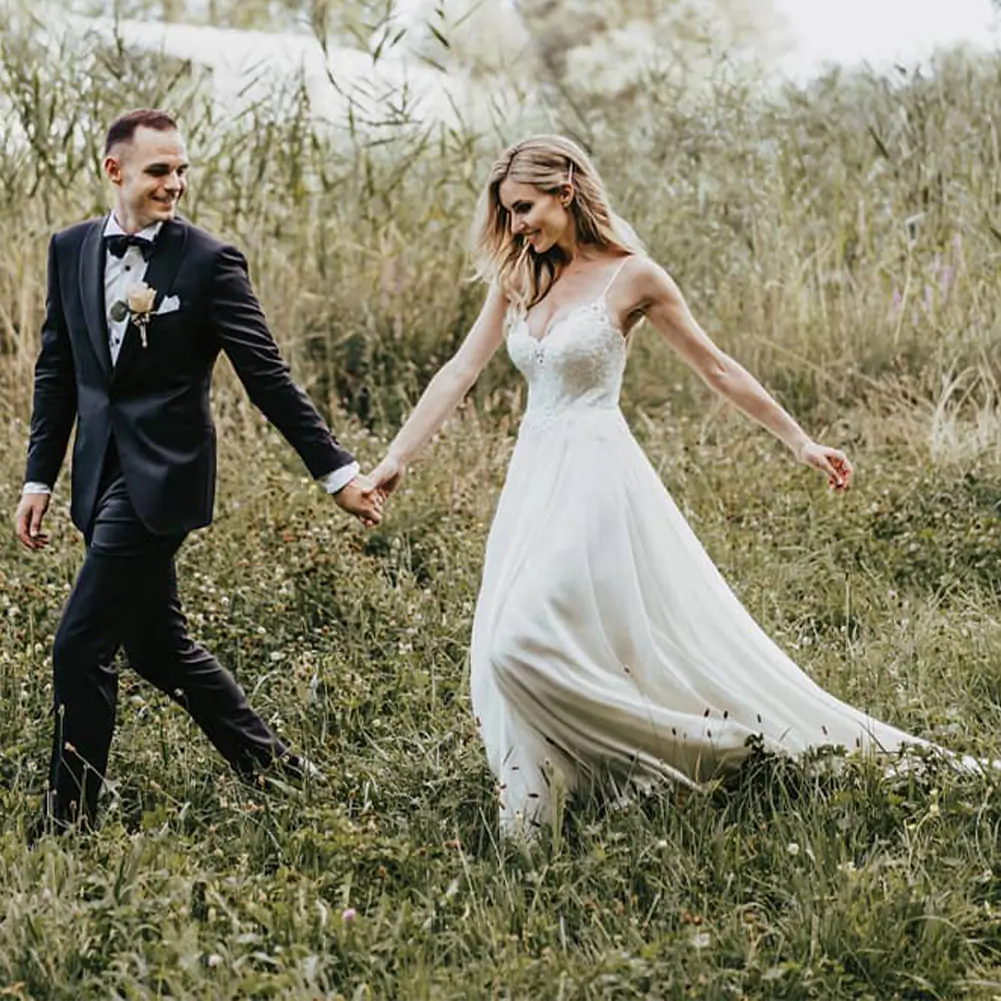
You can choose a wedding dress starting size from your measurements, but measurements alone are usually not the whole decision. They tell you where to begin, especially for bust, waist, and hip comparison, but they do not fully explain how a specific silhouette, neckline, back detail, and fabric structure may feel once the dress is on. If you are ordering online, the safest approach is to use measurements as your base, then confirm the shape, photo details, and support information before you move forward.
That matters even more when you are comparing bridal styles without trying them on first. On the current Cupocupa bridal path, the decision is not only about a number on a chart. It is also about how the dress is cut, how much structure you can see in the bodice, how the skirt falls, and whether the back detail changes how supported you want to feel. If you need the measurement baseline first, start with the Size Guide, then use the rest of this checklist to decide whether your first size choice is actually the right one.
What measurements can do well
Measurements are still the most useful first filter when you shop for a wedding dress online. They help you move from guesswork to a clearer starting point, and they make style browsing more practical.
They are especially helpful for three things:
1. They give you a consistent starting size
If you know your current bust, waist, and hip numbers, you can compare yourself against the bridal chart instead of relying on your usual ready-to-wear size. That is important because bridal sizing often does not line up neatly with what you wear in everyday clothing. The point of the chart is not to predict perfection. It is to keep your first choice anchored in something measurable.
2. They show where the main fit pressure will be
Your measurements can reveal which area is most likely to drive the decision. For some brides, the waist is the deciding point. For others, the bust or hip matters more. This is one reason “measurements only” is not always enough: the chart might point you to one size, but the silhouette may place more visual or structural emphasis on one part of the dress than another.
3. They help you ask better questions before ordering
Once you know your numbers, you can use them to ask more precise pre-purchase questions. That usually leads to a better decision than asking whether a dress “runs big” or “runs small.” If you want help framing those questions, Cupocupa already has a related guide on how to ask better fit questions before ordering a wedding dress online.
Where measurements stop being enough
The weakness of measurements is simple: they tell you size, but not the full wearing experience. Two dresses can suit the same chart entry and still feel very different once you consider support, movement, and shape.
Bodice structure changes the decision
A dress with visible structure through the bodice may feel firmer and more guided through the upper body. A softer dress may move more easily but feel less anchored, especially if you are sensitive to support at the bust or waist. That is why a size choice should not be separated from what you see in product photos. The Cupocupa article on whether a wedding dress will feel too structured or too soft is useful here because structure affects how confident a size choice feels.
Back detail changes support expectations
If a dress has a lower or more open back, some shoppers care less about the number on the chart and more about whether the shape will still feel secure enough for the setting. Measurements help, but they do not replace a visual check of the back line, the bodice shape, and the way the dress is meant to sit through the torso.
Silhouette changes where fit matters most
An A-line shape often gives you more flexibility through the lower half than a closer-fitting silhouette would. That does not mean you can ignore hip measurements. It means the same chart number may feel more forgiving in one silhouette than another. If you are browsing different shapes, the Occasionwear Bridal Edit and the Wedding Dresses category are better places to compare the visual cut before you rely on the chart alone.
How to use measurements the right way before ordering online
If you want a practical answer, use this sequence instead of asking whether measurements alone are enough.
Step 1: Start with your current numbers, not memory
Use fresh bust, waist, and hip measurements. Even small differences can matter when you are using a bridal chart as your baseline. If you have not measured yet, go to the Size Guide first.
Step 2: Match those numbers to the chart
Find the nearest starting size from the chart rather than the size you hope to be. This is the part measurements do best: they remove emotion from the first pass and give you a real point of comparison.
Step 3: Look at the photos for structure, neckline, and back detail
After you have a starting size, use the product photos to judge how the dress is built. Look for where the bodice appears shaped, where the skirt begins to open, and whether the neckline or back detail suggests you may want more support confidence before ordering. Measurements alone cannot answer that.
Step 4: Read the support pages before you continue
Before moving ahead, review the current Bridal FAQ and Shipping & Return Guidance. This keeps your size decision connected to the real support path on the site instead of turning it into an isolated guess.
Step 5: Ask one focused question if something still feels unclear
If your measurements put you in between chart points, or the photos make you unsure about support or shape, send one focused note through Contact. A concise question based on your measurements and the specific dress detail is more useful than asking for a general opinion.
How this applies to Cupocupa’s current bridal focus
Cupocupa’s current live bridal path centers on a vintage A-line lace wedding dress and a support-first bridge flow. That means the most useful way to shop the site is not to treat the size chart as a final answer by itself. Instead, use the chart to narrow your starting point, then compare the photos and support pages before you continue to the current listing.
For an A-line dress in particular, measurements are strong enough to get you close, but they still need context. The shape may offer more ease through the skirt than a more body-following silhouette, while lace placement, neckline shape, and back openness can still affect how confident you feel about the choice. This is why Cupocupa’s bridal funnel includes the Size Guide, Bridal FAQ, Contact, and the featured dress path instead of asking you to make the decision from one chart screenshot alone.
A simple rule to remember
If your measurements line up cleanly with the chart and the dress photos do not raise any support or silhouette concerns, measurements may be enough to choose a starting size with reasonable confidence. If your measurements fall between sizes, or the style details make you pause, measurements are only the first step, not the final answer.
That is the better mindset for online bridal shopping: use measurements to choose where to begin, then use shape, photos, and support content to decide whether that size choice actually makes sense for the dress you are considering.
What to check next
If you are narrowing down your next step on Cupocupa, this order works well:
- Review the Size Guide for the chart baseline.
- Read Wedding Dress Size Chart Explained if you want more help reading bust, waist, and hip measurements.
- Browse the Occasionwear Bridal Edit or the Wedding Dresses category to compare shape and visual details.
- Use Contact if you need to ask a fit-specific question before you continue.
That sequence keeps the decision inside the current Cupocupa bridal funnel: measurements first, context second, then a clearer move toward the current listing.