How to Tell If a Wedding Dress Will Feel Too Structured or Too Soft Before You Order
If you are deciding between a wedding dress that feels more structured and one that feels softer, start by looking at three things first: how the skirt falls, how defined the bodice looks, and how much precision the fit seems to require. A softer bridal direction usually moves more easily, feels less body-close through the lower half, and gives you a gentler visual line in photos. A more structured direction usually looks cleaner, sharper, and more shaped, but it often asks for more fit accuracy. When you are shopping online, that difference matters because it changes how confidently you can move from product photos to a real purchase decision.
At Cupocupa, the current bridal path is intentionally centered on a softer A-line direction rather than a tightly sculpted silhouette. That makes this question especially useful if you are comparing the live featured dress with the more defined shapes you may also have in mind.
Why this decision matters earlier than most brides expect
Many online bridal shoppers think they are choosing a dress based mostly on neckline, lace, sleeves, or back detail. Those details matter, but the first big filter is often structure. If you skip that step, you can end up comparing dresses that are beautiful in photos but wrong for the way you actually want to feel during the ceremony.
A dress that feels too structured for you can create second-guessing around movement, comfort, and measurement pressure. A dress that feels too soft for you can leave you wishing for a more defined line, especially if you imagined a stronger contour in your photos.
That is why the better question is not only, “Do I like this dress?” It is, “Do I want a dress that holds its line firmly, or one that gives me more movement and ease?”
Start with skirt behavior, not just the front photo
The fastest way to judge structure online is to study what the skirt seems to do.
Signs a dress may feel softer
A softer wedding dress usually:
- falls away from the body instead of tracing it closely
- creates movement when walking
- looks easier through the hips and lower half
- feels visually lighter in side and angled views
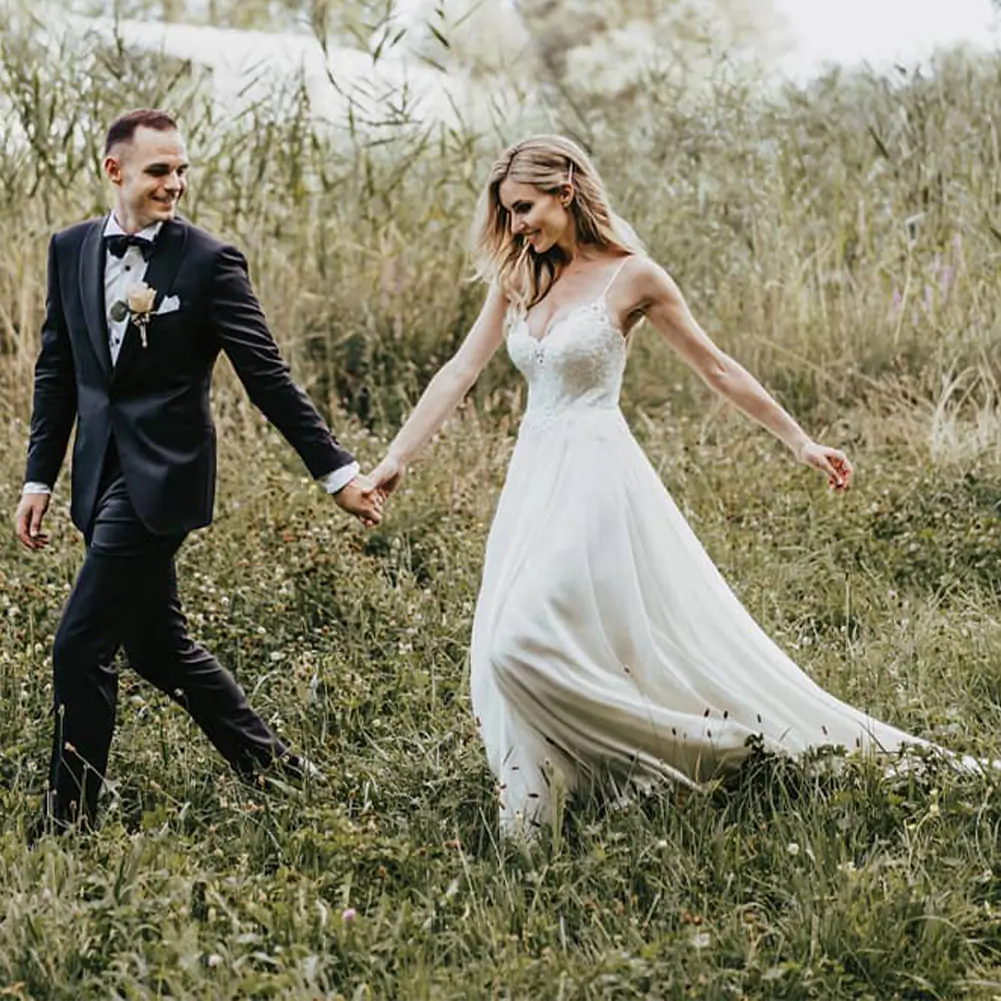
This is why a softer A-line shape often feels approachable for a first bridal decision. On Cupocupa’s current featured wedding dress, the skirt direction is meant to read more romantic and fluid than sharply sculpted.
Signs a dress may feel more structured
A more structured wedding dress usually:
- keeps a clearer outline even when the model is standing still
- looks more controlled through the waist and hips
- creates a stronger body-defined impression
- depends more on precise fit through key measurement points
This does not make it better or worse. It simply means the dress may ask more from the sizing decision, and it may feel less forgiving if you are still uncertain about your exact starting size.
Look at the bodice for visual firmness
The bodice often tells you more than the skirt about how “held” the dress might feel.
If the upper part of the dress looks highly shaped, close through the torso, or visually firm around the bust and waist, that usually signals a more structured experience. If the bodice looks supportive but not severe, and the overall line relaxes into the skirt, you are usually looking at a softer bridal direction.
This is where close-up product imagery becomes useful. On the Cupocupa site, the current bridal product gallery gives you more than one angle for the lace bodice and overall dress line. When you review those photos, do not ask only whether the bodice is pretty. Ask whether it looks like it wants exact control, or whether it works with a little more softness through the full silhouette.
Use your own measurement confidence as a clue
One of the most practical ways to choose between structured and soft silhouettes is to be honest about how certain you feel about your measurements.
If you already have fresh bust and waist numbers and you usually feel comfortable ordering fitted formalwear online, you may be more open to a dress with a cleaner, more body-defined line.
If you are still narrowing your starting size, a softer silhouette often gives you a calmer entry point. That does not remove the need to measure. It simply means the overall shape may feel less dependent on a sharply exact visual contour through every area.
Before moving forward, compare your numbers with the current Cupocupa size guide. The live bridal support path is built to help you review size before you rely too heavily on a dress photo alone.
Read the back detail as part of structure, not just style
Brides often treat open-back design as a style-only feature, but it also affects how a dress feels.
For example, an open criss-cross back can make a dress feel more visually light and more romantic, even when the bodice itself still gives shape. That is part of why the current Cupocupa featured dress reads softer overall: the combination of A-line movement, lace bodice, and open back creates a less rigid impression than a more closed, sculpted silhouette would.
When you review back photos, ask:
- does the back detail make the dress feel airy or controlled?
- does the dress still look easy to move in from the side and back views?
- does the upper body look firm in a way that feels reassuring or restrictive to you?
Those questions help you move beyond “I like this back design” into “I understand how this design changes the total feel of the dress.”
Compare the emotional effect you want in photos
Structured versus soft is not only a fit issue. It is also a photo issue.
A softer dress direction often reads as:
- romantic
- lighter
- easier in motion
- gentler around outdoor or beach settings
A more structured direction often reads as:
- sharper
- more sculpted
- more formal
- more controlled in still poses
If your ceremony vision leans toward movement, softness, and a less severe line, a softer silhouette may support that better. If you want a stronger contour and a more defined body line, structure may matter more to you than softness.
Cupocupa’s current Occasionwear Bridal Edit explicitly frames this comparison as “softer movement” versus “a more sculpted line.” That is a useful way to sort your preferences before you over-focus on decorative details.
What to check before you continue to Amazon
Before leaving the site for the live marketplace listing, it helps to keep the decision process simple.
Check these in order
- Decide whether you want softer movement or a more sculpted line.
- Review the featured dress from front, angle, and back views.
- Confirm your starting size in the Size Guide.
- Read the Bridal FAQ if you are still comparing silhouettes or wondering how to think about between-size decisions.
- Use Contact Bridal Support if your hesitation is still tied to fit direction, timing, or how the silhouette may feel on your frame.
If timing is part of the pressure, keep the Shipping & Returns guidance in the same review flow. The site is careful not to overpromise on ceremony-sensitive timing, so that page works best as a checkpoint before you commit.
A simple rule if you still feel undecided
If you keep returning to the question and still cannot tell which direction feels right, use this shortcut:
- choose softer if movement, ease, and a less body-close finish matter most
- choose more structured if contour, control, and a sharper line matter most
That answer will usually narrow your next step faster than comparing ten small design details at once.
And if you want more bridal guidance before you move on, the Bridal Journal already covers related questions around measurements, size reading, and fit questions you can ask before ordering online.
Next step
Compare the featured A-line dress first, then open the Size Guide and send a bridal support question if you still feel split between a softer and more structured silhouette.